
PSHE
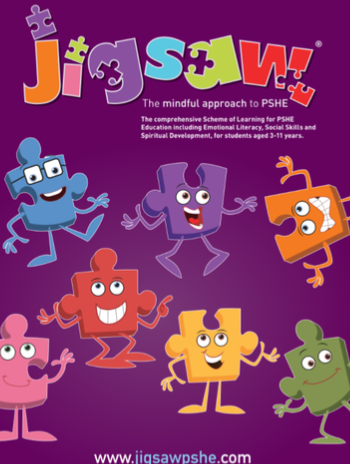
What is Jigsaw?
At KPS, we follow the Jigsaw PSHE Scheme of Work. Jigsaw PSHE is a comprehensive and completely original Scheme of Work for the whole primary school, from Early Years through to Year 6. It brings together PSHE education, emotional literacy, social skills and spiritual development in a comprehensive scheme of learning.
SMSC (Spiritual, Moral, Social and Cultural) development opportunities are mapped throughout. All of these elements of learning are brought together to form a cohesive picture, helping children to know and value who they are and understand how they relate to other people and the world around them.
Jigsaw PSHE is designed as a whole-school approach, with all year groups working on the same theme (Puzzle) at the same time.
How does Jigsaw PSHE work?
Each year group has a Jigsaw character, with its distinctive colour, and a chime bar to encourage calmness.
Each Piece (lesson) has two Learning Intentions: one is based on specific PSHE learning, and the other focuses on developing emotional literacy and social skills. Jigsaw is relevant to children living in today's world, helping them to understand and be equipped to cope with issues such as body image, cyberbullying, homophobic bullying and internet safety.
What is a mindful approach?
How would children benefit if they could be aware of their thoughts and feelings as they happen, in the present moment, on purpose and without judgement? This is what mindfulness means. It can be learnt, and techniques to develop it can be taught. It also needs to be practised.
We believe mindfulness is a vital tool for life. Not only does it support the regulation of emotions and build emotional resilience, but it also enhances focus and concentration, both of which help to optimise learning.
Mindful children can more readily choose their responses to situations rather than react while caught up in their thoughts and emotions.
In Jigsaw PSHE, mindfulness is developed through the ‘Calm Me’ time in each Piece (lesson). This consists of breathing techniques, awareness exercises, visualisations and other activities, all of which are enjoyable and accessible for children and teachers alike.
The 6 Puzzles
Autumn 1: Being Me in My World
Includes developing an understanding of rights and responsibilities.
Autumn 2: Celebrating Difference
Includes anti-bullying (including cyberbullying and homophobic bullying) and diversity work.
Spring 1: Dreams and Goals
Includes goal-setting, aspirations, working together, and designing and organising fundraising events.
Spring 2: Healthy Me
Includes drugs and alcohol education, self-esteem and confidence, as well as healthy lifestyle choices.
Summer 1: Relationships
Includes understanding friendships, family and other relationships, conflict resolution and communication skills.
Summer 2: Changing Me
Includes growth and change, life cycles, including human reproduction, respecting our bodies and sex education.
My Happy Mind
My Happy Mind My Happy Mind is a programme that helps children understand their emotions, build confidence and develop positive habits for life. Through fun, engaging activities, pupils learn about their brains, feelings, friendships and how to look after their mental wellbeing.
The programme encourages children to recognise and manage their emotions, develop resilience and celebrate what makes them unique, helping them to feel happy, confident and ready to learn.
What are the benefits of My Happy Mind?
My Happy Mind supports children to:
- Understand how their brains work and how this affects their thoughts and feelings.
- Recognise and manage a range of emotions.
- Develop confidence and self-esteem.
- Build resilience and learn how to cope with challenges.
- Recognise their own strengths and celebrate what makes them unique.
- Develop positive friendships and relationships.
- Understand the importance of positive habits for mental wellbeing.
- Develop skills that support focus, learning and emotional regulation.
We believe that supporting children's mental health and wellbeing is an essential part of helping them to flourish. My Happy Mind complements our wider PSHE curriculum and provides children with practical tools that they can use both at school and in everyday life.
My Happy Mind Parent App
Parents and carers can also access the My Happy Mind Parent App, which provides resources and activities to help families continue the learning at home.
The authentication code for the Parent App is 146006. Parents can sign up using the activation link below:
We encourage families to use the app alongside the work we do in school, helping children to develop positive habits and have conversations around mental health and wellbeing.
E-Safety
Through our PSHE and Computing learning, we prepare our children to stay safe online. E-Safety is taught to all pupils, explaining and demonstrating how to stay safe and behave appropriately online. Through these lessons, we explore how to stay vigilant when communicating online, the importance of privacy and being careful when sharing information, the reliability of information from web-based sources, the impact of cyberbullying and how to behave appropriately online. We also ensure that children know who to talk to if something online is upsetting or concerning them.
At KPS, we follow the SMART rules:
S – Safe
M – Meet
A – Accepting
R – Reliable
T – Tell
We also explore E-Safety when we take part in the annual Safer Internet Day. This is an important opportunity to raise awareness of issues relating to online safety, and for every class to participate in activities and discussions about how we can stay safe online.
Useful E-Safety Websites
- Childnet - Online Safety for Young People
- Thinkuknow - the education programme from NCA-CEOP, a UK organisation that works to protect children and young people online. Explore one of the Thinkuknow websites for advice about staying safe when using a phone, tablet or computer.